We arrived in Lilongwe expecting a bustling capital like Nairobi or Lusaka, but instead found a quiet, approachable town with fewer than 250,000 residents. Following Africa on a shoestring’s recommendation, we headed to the Lilongwe Golf Club, where we met Sally, a middle-aged White Malawian who welcomed us warmly and showed us around. She said the area was safe and that we’d have access to locker rooms with hot showers and working toilets. If we wanted, we could use the bar and dining room. They even had a phone that could make international calls.
We set up our tent that evening, and just before sunrise the next day we were awakened by the muezzin’s call to prayer from the mosque across the Lilongwe River from the Golf Club. Five months after we were startled awake that first morning in Cairo, the call had gone from alarming to an alarm clock. Sally suggested we try a place called Gracie’s Hungry Hut for breakfast, only a few blocks away.
Once there, I again raised the question that was consuming me. “What will you do while we’re apart?”
“I’ve already told you. I’ll think.”
“Where will you go when I’m gone?”
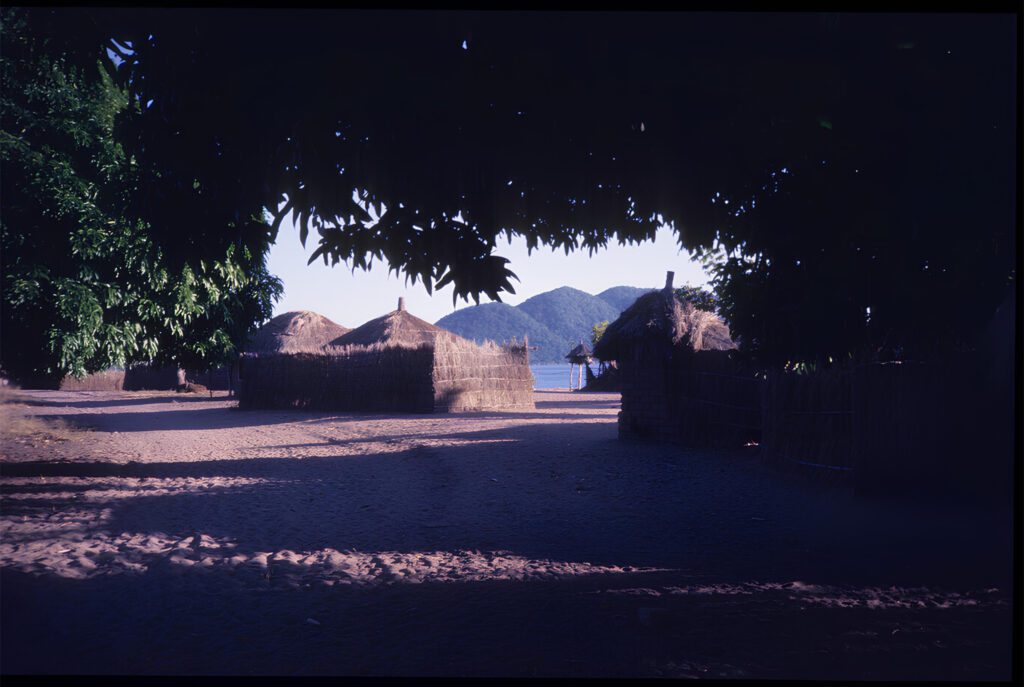
“Probably Lake Malawi.”
“If you head east to the lake, I guess I have to go south. North isn’t an option until the wet season ends, and I didn’t see anything interesting out the window on the bus ride from the border.”
Then I realized it had been almost seven months since I last spoke with Lurnix. “Before we make any plans, let me contact the Brits to see whether the deal is still on.”
That afternoon I sent a telex to Allan Bailey, provided him with the Golf Club’s phone number, and suggested a nine a.m. call the following Tuesday.
After counting our cash, we found we had only about $250 left between us. When we learned there was no AmEx or Deutsche Bank office in Lilongwe, Sally sent us to the National Bank of Malawi, where the manager suggested a three-party wire transfer, something new to us. After filling out a stack of forms, he assured us the funds would be processed within four business days. It turned out to be an optimistic fiction.
The following Tuesday, the Golf Club phone rang. The line quality was terrible, but I was making my first phone call in six months. “We want to fly you to the UK for a week of discussions before we pull the trigger,” Allan shouted.
I shouted back, “Allan, my clothes are in such bad shape that some of the local restaurants won’t let me in. I wouldn’t be presentable, and I have nothing warm or dry enough for March in London.”
“We’ll route you through Johannesburg, and you can kit up there. Two weeks from today. Let me know if that works for you.”
Vivian heard only my side of the conversation. “They want you in London?” she asked after I hung up. “You should go.”
“And leave you behind? Alone?”
“Süsser, don’t worry about me. How many days will it be?”
I started counting. “All my business clothes are in storage, so I’ll need to buy a suit and a jacket in Johannesburg. A day to fly there, two days to get things fitted, and a day to fly to London. Five days in London. A day to fly back. Probably ten days total.”
“Stop in Munich after London and pick up the cold-weather clothes we left at Mac’s. It will be our two weeks apart. We were planning it anyway.”
“How will I let you know if anything changes? What if you need to reach me?”
“I’ll check in at the Golf Club a few days before you’re due back. Leave a message there if anything changes.”
The next morning, Vivian went to Gracie’s Hungry Hut while I worked on travel plans. When I arrived at the diner, I found her talking with a friendly, mixed-race Malawian woman in her early thirties. “Flaco, this is Grace Cameron. She’s Gracie, the owner of the restaurant,” Vivian said.
Grace sat down and talked with us about our trip, the job with Lurnix, and even when we might have children. It struck me that Grace charmed people as effortlessly as Vivian did.
“You must come to dinner by our place tonight. My husband, Arthur, will be excited to meet you and hear about your travels.”
That evening, Grace’s brother Albert drove us to a large house near downtown Lilongwe, where we were greeted by a friendly British man in his mid-thirties, tall and thin, with an enthusiastic Kiplingesque mustache. “I’m Arthur, Gracie’s husband,” he said. “You’ll probably meet our daughters later this evening. Amelia is eleven, and Olivia is nearly three. Unfortunately, our seven-year-old, Patrick, is in the UK with my parents. We had to send him there for malaria treatment. It’s the wet season, you know.”
Vivian asked, “Couldn’t he be treated here?”
“The old drugs are starting to fail us. Damned parasites are adapting all the time, and there’s only so much we can do in Lilongwe. Fortunately, Patrick went on the drip in London, and he’s recovering well.”
Grace, who had been in the kitchen, came in to tell us dinner was ready. We went to the dining room and continued our conversation. Soon, Grace and Amelia served us, first kneeling near the table, then slowly moving forward on their knees. After serving us, they backed away on their knees, saying they would eat outside on the veranda. Vivian’s eyes widened.
“Oh, Gracie, be social,” said Arthur, but his wife only smiled.
Arthur sighed. “Gracie’s giving you the full Malawi experience tonight. Traditionally, women don’t eat at the same table as men. They serve the food, then eat on the veranda.”
“Does tradition include serving the food on their knees?” Vivian asked.
“Yes. She doesn’t do this often. It’s as much for Amelia as for anything else. Gracie wants to keep the Malawian way of life alive in our home.”
“Should I eat out on the porch, too?”
“No, of course not. You’re European.”
I asked Arthur what he did for a living. “I’m an agricultural economist.”
“It must be satisfying to help farmers grow more food and maybe earn some money on the side,” Vivian said.
“Well, yes,” he replied, hesitating before continuing. “But honestly, I’ve been at this for eighteen years, and I sometimes wonder whether I’m helping at all. The population has doubled since I arrived in Malawi, and two-thirds of the country is under twenty-five. Smallholder farms are mostly too small to subdivide, so when the children grow up, they go to the cities, usually in slums and shanties. It’s not good for anyone. The economy is barely treading water. Then there’s the corruption. It’s all a bit of a shambles.”
Later that evening, Albert drove us back to the Golf club. We had no idea how important the Camerons would be to us in the coming weeks.
After nearly two weeks, the wire transfer still hadn’t gone through, and we were running out of money. Telexes to Deutsche Bank either went unanswered or produced empty promises. With only a few days before I left, we counted our cash. It was just over a hundred dollars. Vivian took it all. Once in South Africa, I could use my credit card and get traveler’s checks at an American Express office. One hundred dollars wasn’t enough for Vivian to live on for two weeks, but she said she wasn’t worried, convinced she would bend the bank’s bureaucracy to her will.
The next morning, Vivian and I took the bus to the airport, mostly in silence. As my boarding pass printed, I said, “Please take the telex number for Lurnix, just in case.”
“Why? By the time you reach London, I’ll be somewhere else—probably in the bush.”
When I insisted, mostly to shut me up, she wrote the number in her notebook.
The journey continues every Thursday. Join us.