As I checked into the residential hotel where I would spend my first month in Munich, I asked the receptionist whether it was safe to walk to a restaurant through the Englischer Garten, the city’s large, mostly unlit central park. She laughed.
Munich. 1986.
Earlier that day, I arrived at Munich-Riem Airport. At the taxi line, a well-fed Bavarian driver in lederhosen waited in a spotless Mercedes sedan with the heat turned up high. I handed him a card with my hotel address. He looked at it, started the meter, and grunted something in deep Bavarian that would have been unintelligible even if I’d known textbook German. I guessed he was telling me to get in the taxi, so I did.
The ten-kilometer drive to my hotel revealed the city like a reverse archaeological dig. Neighborhoods morphed from the modern, nondescript Bauhaus of the postwar reconstruction era into arched buildings from the 1400s, with stone turrets built for medieval defense. Roads went from smooth asphalt to rough cobblestone. The streets became so narrow that I wondered how cars kept their side mirrors from scraping off. People were everywhere on bicycles, bundled in padded jackets and scarves, contending for the right-of-way with pedestrians and cars. Somehow it all worked.
The driver stopped, pointed to the meter, and said something I assumed was the fare. I paid what I read and added a couple of marks for Trinkgeld (tip). Service workers in Munich loved Americans who tipped 10% or more. Typical Germans rounded up to the nearest mark, while complaining that American generosity was somehow ruining the work ethic.
Germans made do with less of everything, another leftover of the war.
The residential hotel was small but functional. The walls were covered with institutional art. The furniture was durable if uninspired.
The kitchenette was tiny, with a stove that reminded me of an upsized Easy-Bake oven. The shower was the size of a telephone booth.
Next to the toilet was this bidet thing, which I still hadn’t figured out how to use, or if I was supposed to.
Before going to dinner, I made a 10-minute call to the US. It cost about $50 adjusted for today’s inflation. I would be writing lots of letters.
To help me stay awake after the long flight, I walked a few kilometers along Leopoldstrasse to the upscale Schwabing district of north-central Munich for dinner. After trying to decipher the menu, I ordered Schweinshaxe, thinking it meant ‘pig and hacked,’ a pork chop. It turned out to be pig knuckles. I moved it to the side of the plate, untouched.
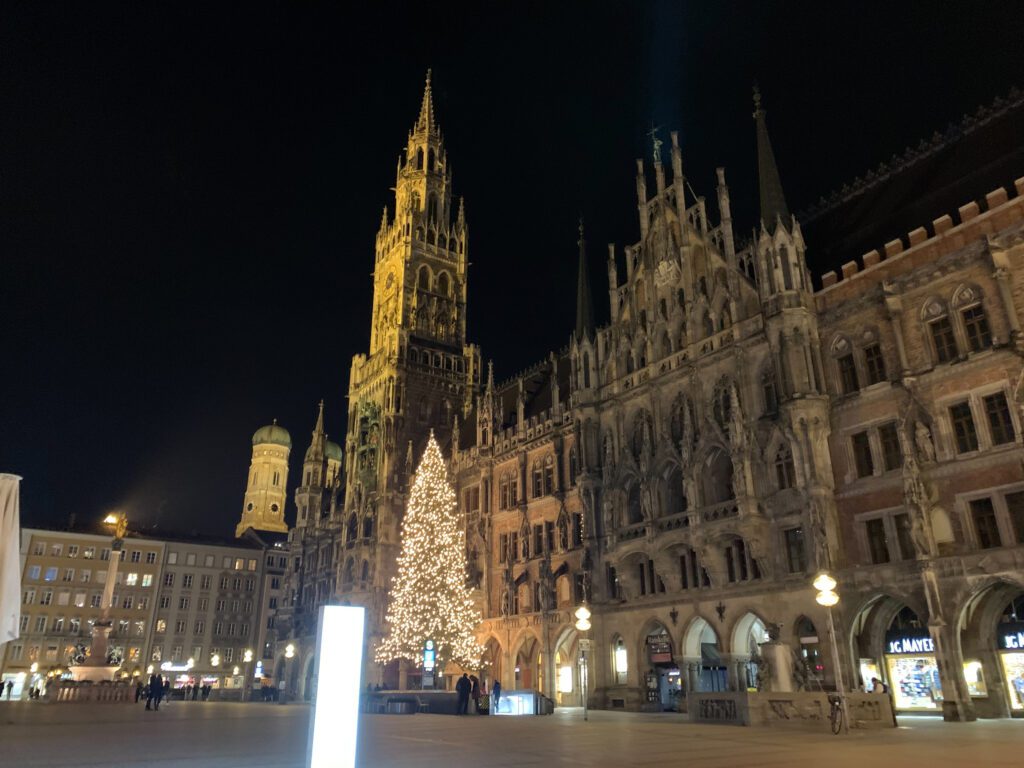
Still hungry after dinner, I walked back to my hotel through the Englischer Garten, then south to Marienplatz, the heart of Munich’s old city, dominated by the Rathaus (City Hall) with its Gothic façade. Locals strolled across the cobblestones, heading to the shops at the nearby railway station, carrying food and fresh flowers; it was one of the few places where shops were allowed to stay open past 6:30, and the closest thing Munich had to a convenience store. Back in the room, I turned on the television and channel surfed until I found a show with a laugh track. It was in German, but it helped me fight my jet lag until nine.
A month later, Vivian, who by then had stopped being my German teacher but wasn’t quite my girlfriend, asked me her favorite question: “What have you learned since coming to Munich?”
“I’m like a child in ability but an adult in responsibility,” I replied before starting down my list of complaints. “Dealing with an apartment broker who speaks Bavarian German when you barely speak High German. Quiet time starts at 10 PM. And they will call the police. Finding out through an expensive ticket that if the curb is blue, it’s handicapped parking. Sorry, no signs. Not that I could read them. Food? Bag your own groceries and be quick about it. Hold up the line because you don’t want your eggs crushed, and you get the German stare.”
Vivian laughed at my rant.
I continued, “Sometimes, though, I don’t feel very welcome in Munich as an American. Germans seem to appreciate that we keep the Russians out, but we’re still an occupying power. I was called a Scheiss Ami (Shit American) in the U-Bahn the other day by a couple of drunks wanting to start a fight. I pretended I didn’t know what they were saying and escaped on a train.”
Vivian smiled. “I thought that Canadian flag on your briefcase was new.”
“Everyone loves the Canadians. Eh?”
“I meet a lot of expats as a translator,” she said. “Almost all of them say the same thing. After about six months, they want to go home.”
After six months, so did I.
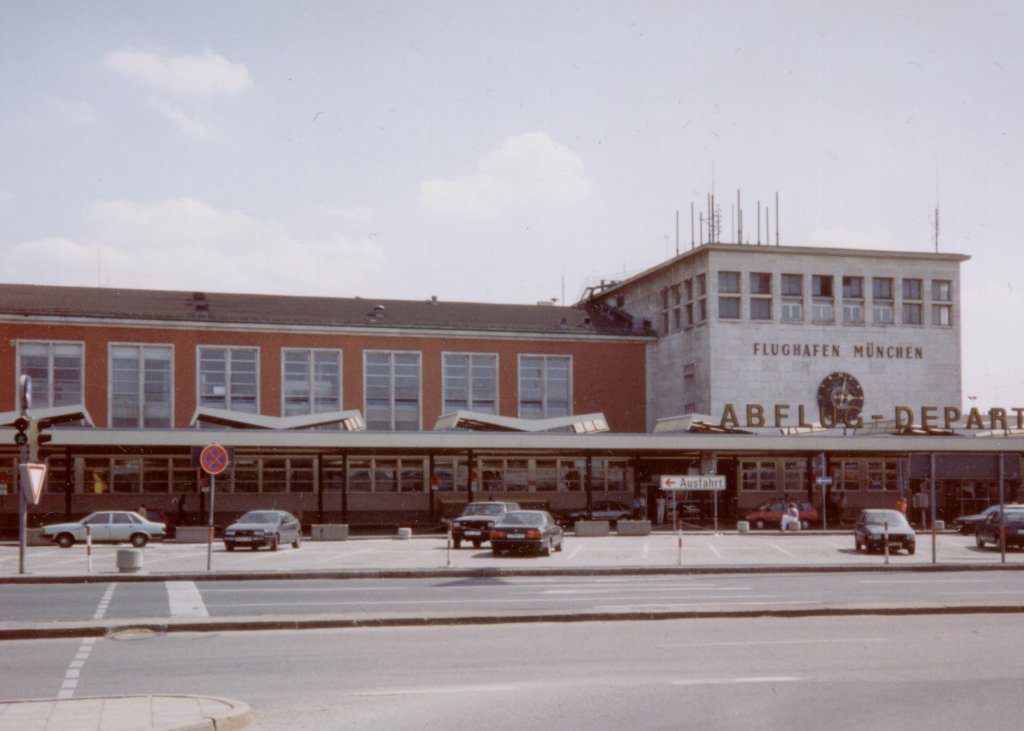
Munich-Reim Airport: Okfm, Wikicommons
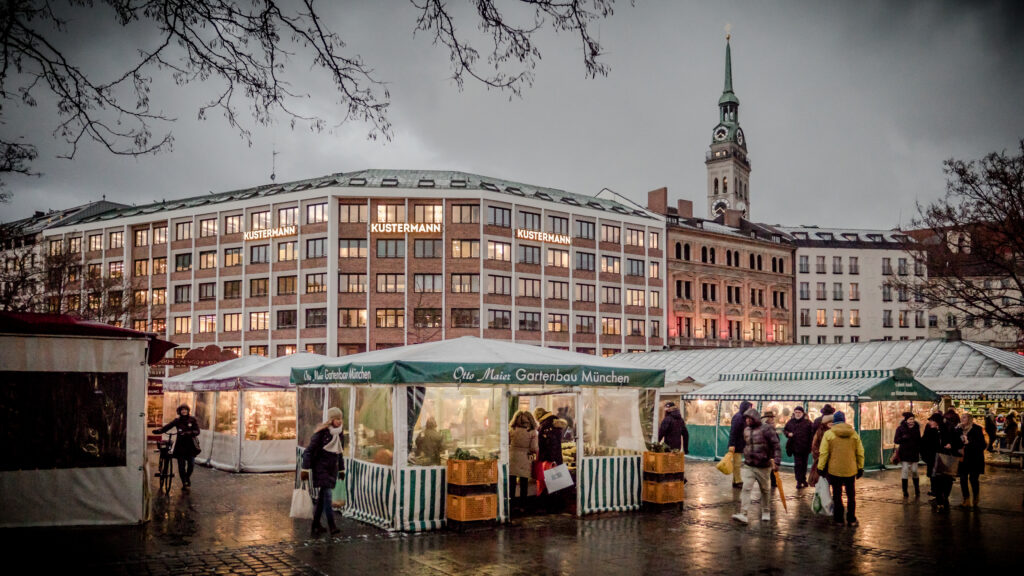
Viktualienmarkt, Open Air Market, Munich: Heinz Bunse, Wikicommons